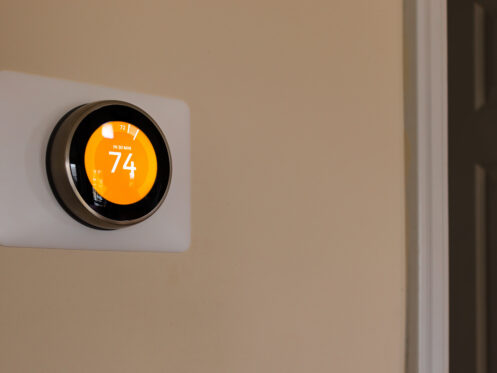
A smart thermostat can do much more than raise or lower the temperature. For Ohio homeowners, the real benefit comes from using features that help your AC respond to your schedule, track energy use, and reduce wasted cooling during peak summer heat.
When those features are set up correctly, your AC can run more efficiently without making the house feel uncomfortable. The key is to let your thermostat work around your routine, comfort preferences, and the way your home handles heat and humidity.
What Makes a Thermostat Smart?
A traditional thermostat controls the temperature based on a set point. A smart thermostat does that too, but it also uses connected features to make temperature control more responsive. Many models can connect to Wi-Fi, learn your schedule, track runtime, send alerts, and let you make changes from an app.
Some smart thermostats also use occupancy sensing or geofencing. That means the thermostat may detect when people are home or use your phone’s location to adjust cooling when you leave and return. These features can reduce unnecessary runtime during work hours, vacations, or long summer weekends away from home.
If your thermostat is calling for cooling but your home still takes too long to cool down, the issue may not be the thermostat. Our AC repair services can help determine whether the system itself is causing the problem.
Use Learning Features With Realistic Comfort Limits
Learning thermostats are designed to pick up on your patterns over time. They may notice when you leave, when you return, and when you prefer the home cooler. That can be useful, but the thermostat still needs reasonable comfort limits.
If the allowed temperature range is too wide, your home may get warmer than you want during a humid Ohio afternoon. If the range is too tight, the system may not save much energy. Set clear comfort preferences and give the thermostat time to learn from consistent patterns.
- Learning schedules that adjust around your routine
- Geofencing that responds when you leave or return
- Energy reports that show cooling runtime
- Maintenance reminders for filters and system service
- Humidity readings when your model includes them
Let Energy Reports Show What Is Really Happening
One of the biggest advantages of a smart thermostat is visibility. Energy reports can show how long your AC runs, when it runs the most, and whether usage has changed compared to previous days or weeks. That information is more useful than guessing based on the utility bill alone.
If the runtime jumps during similar weather, something may be changing inside the system or the home. A clogged filter, dirty coil, weak airflow, or aging equipment can cause longer cycles. Smart thermostat data cannot fix those problems, but it can point out when something deserves attention.
Routine AC maintenance helps make that data more meaningful. When the system is clean and operating properly, your smart thermostat has a better chance of saving energy without sacrificing comfort. Use maintenance reminders if your smart thermostat offers this feature.
Use Humidity and Fan Features Carefully
Ohio cooling is not only about temperature. Humidity can make a home feel warmer, even when the thermostat setting looks reasonable. If your smart thermostat shows indoor humidity, pay attention to those readings during sticky weather. High humidity may explain why the house feels uncomfortable without needing a much lower temperature setting.
Fan controls also matter. Many smart thermostats let you run the fan on auto, on, or circulation mode. Running the fan constantly may sound helpful, but in humid weather, it can sometimes move moisture back into the home after a cooling cycle. Auto mode is often a better starting point, while circulation mode may help move air without running the fan nonstop.
Use Alerts Instead of Waiting for a Breakdown
Smart thermostats can often send alerts for unusual temperature swings, long runtimes, filter reminders, or system behavior that does not match normal patterns. These alerts are easy to ignore, but they can be useful during peak summer heat.
If your thermostat says the system is running longer than usual, that may be an early sign of strain. If the home is not reaching the set temperature, the AC may need professional attention. Our AC installation team can also help if your current system is no longer keeping up and replacement is the more practical option.
Make the Smart Features Work for Your Home
A smart thermostat is most effective when it is used as an intelligent control center, not just a digital version of an old thermostat. Learning schedules, geofencing, energy reports, humidity readings, and alerts can all help you understand how your AC is performing during Ohio’s hottest weeks.
When the thermostat data shows rising runtime, poor recovery, or comfort problems that keep coming back, the next step is looking at the cooling system behind it.
If your smart thermostat is showing signs that your AC is working harder than it should, contact KW Lang Mechanical for expert AC service in Solon, OH.